
Summary
Downsizing for senior living involves thoughtful planning to determine what to keep and what to release as you transition to your new apartment home. This practical approach helps you create a comfortable, clutter-free space that reflects your personality while fitting your community living environment.
- Start by reviewing your new apartment home's floor plan, dimensions, and available features to understand what furniture and belongings will fit comfortably
- Focus on keeping items you use daily, plus personal touches like photos and artwork that make your space feel familiar and warm
- Declutter gradually over several months by sorting belongings into categories: keep, give to family, sell, donate, or discard
- Choose appropriately-scaled furniture pieces, such as loveseats instead of full sofas and round tables instead of large rectangular ones, to maximize open space
- Leave some flexibility to adjust your space after moving in; you may discover you need fewer belongings than expected once settled
Moving to a senior living community often starts with one big question: "What should I bring, and what should I do with everything else?" Downsizing can feel like a lot at first, but a clear plan helps you keep what matters, manage what no longer fits, and settle into your next apartment home with more confidence.
When downsizing for senior living, knowing what to keep and what to get rid of ultimately means choosing what belongs in the next chapter of your life.
Start With Your New Apartment Home Size
Before sorting belongings, learn as much as possible about your future space. Westgate Village offers a variety of apartment home options, so it is important to know both the layout and dimensions of your new home. You can make your own senior living apartment size guide by reviewing floor plans to track and confirm square footage, room layout, and closet space before moving day.
Do not hesitate to ask your new community for measurements of the rooms, doorways, and closets, either. Confirmation can make it easier to plan your transition. If possible, review the floor plan and mark where your favorite furniture may go. This makes it easier to see which pieces will fit comfortably and which may make the space feel crowded.
At Westgate Village, apartment home features such as modern kitchens, walk-in showers, self-controlled heating and air conditioning, and in-apartment washers and dryers can also influence what you decide to bring. For example, you may not need duplicate kitchen items, extra linens, or bulky storage pieces if your new space already offers everyday convenience.
What to Bring When Moving to a Senior Community
When deciding what to bring when moving to a senior community, start with the items you use daily. Then, add personal touches that make your apartment home feel familiar. The goal is comfort, not clutter.
A practical first-round packing list may include:
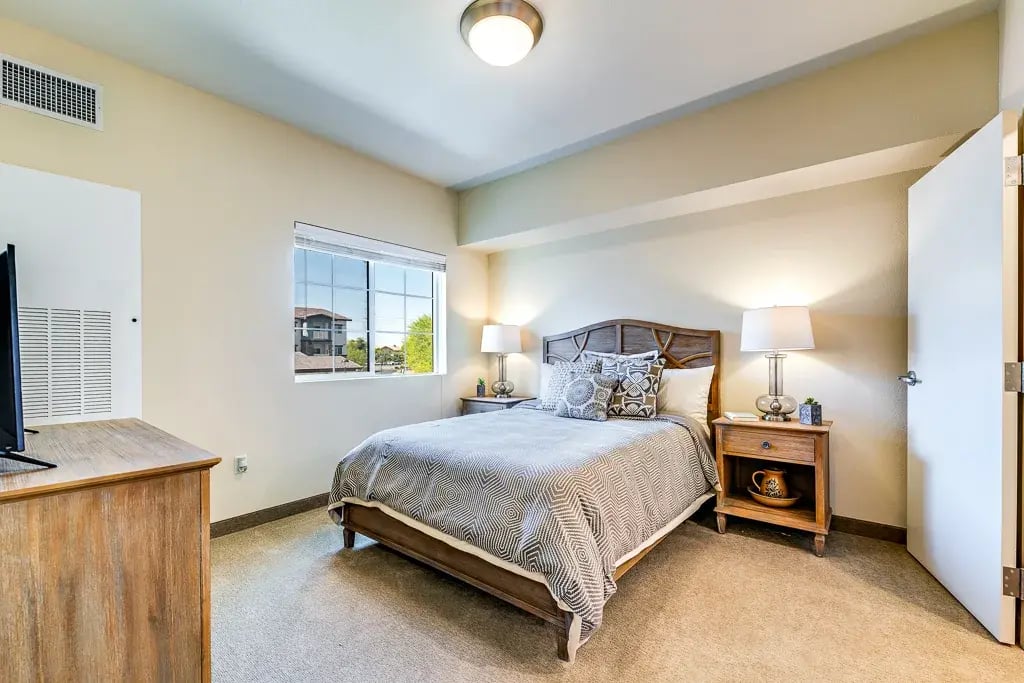
- Bedroom furniture that fits the floor plan, including a bed, nightstand, and dresser.
- A favorite chair, small sofa, or loveseat for reading, relaxing, or visiting with family.
- Everyday clothing, shoes, and outerwear suited to Glendale’s warm climate.
- Kitchen basics, such as a few dishes, glasses, utensils, and small appliances you use often.
- Personal items, including photos, artwork, books, keepsakes, and hobby supplies.
This approach helps you focus on apartment essentials that senior living residents actually use. It also leaves room for enjoying the community around you, from three homestyle meals prepared daily to the library, theater, bistro, patio area, and community programs.
Decluttering Before a Senior Living Move
Decluttering before a senior living move is easier when you avoid trying to do everything at once. Start several months ahead, when possible. Choose one room, one closet, or one category at a time. A small, steady pace helps the process feel more manageable.
Sort belongings into clear groups to make downsizing easier:
- Keep for your new apartment home.
- Give to family or close friends.
- Sell through an estate sale, consignment shop, or online marketplace.
- Donate to local organizations.
- Recycle or discard items that are worn, broken, or no longer useful.
These downsizing tips for seniors moving can also help you pass along important heirlooms to your family. Adult children or relatives may want heirlooms, photographs, recipes, tools, or holiday items. Offering those pieces early can make the downsizing process feel more positive and less rushed.
Deciding What to Keep & What to Let Go
A helpful rule is to keep items that are useful, comfortable, or deeply personal. If something does not fit one of those categories, it may be time to pass it along.
For example, you may keep the armchair you use every morning, the framed family photos that make you smile, and the small dining table that fits your new space. You may decide to let go of duplicate cookware, oversized furniture, boxes of paperwork, or décor that no longer matches how you want to live day to day.
Remember that downsizing does not mean removing your personality from your home. It focuses on choosing the belongings that make your apartment home feel warm, usable, and easy to enjoy.
Furniture for Senior Living Apartments
Choosing furniture for senior living apartments comes down to scale, comfort, and function. Large pieces that worked well in a house may not be the best fit for an apartment home. Smaller, well-chosen pieces often make the space feel more open and easier to move through.
Consider furniture that adds comfort without taking over the room, such as:
- A loveseat instead of a full-size sofa.
- A round or drop-leaf table instead of a large rectangular dining table.
- Chairs with sturdy arms and a seat height that feels comfortable.
- Storage ottomans, slim bookcases, or nightstands with drawers.
- Wall-mounted shelving or a compact media console to save floor space.
Measure before you move. Check the width of furniture, doorways, and hallways so you can avoid surprises. If you are deciding between two pieces, choose the one that gives you more open space and better flow.
Make Your New Space Feel Familiar
Once the essentials are in place, add the details that make the apartment home feel like yours. Hang your favorite artwork. Place family photos where you will see them often. Bring a familiar bedspread, a favorite lamp, or a few cherished books.
Westgate Village is pet-friendly, so residents with pets may also want to plan for a pet bed, food station, leash storage, and other everyday supplies. Keeping these items organized from the start can help the apartment home feel settled sooner.
It is also fine to leave some space open at first. After living in your apartment home for a few weeks, you may have a clearer sense of what you need and how you want your space to look. You might find that fewer belongings make it easier to enjoy community dining, scheduled transportation, weekly housekeeping, the Professional salon and barbershop, and time with neighbors.
FAQ: Downsizing for Senior Living
How Early Should I Start Downsizing?
Start as early as you can, ideally several months before the move. This gives you time to make thoughtful decisions, include family members, and avoid rushed packing.
What Should I Not Bring to a Senior Living Apartment Home?
Avoid oversized furniture, duplicate household items, large collections you no longer use, and anything that makes the space harder to move through comfortably.
How Do I Know What Will Fit?
Use the community’s floor plan, ask for room and doorway measurements, and create a simple furniture layout before moving day. Westgate Village offers suite, one-bedroom. and two-bedroom apartment home options, so the right plan will depend on your needs.
Should I Keep Items in Storage?
Storage can be helpful for a short transition, but many people find they use fewer stored items than expected. Review storage items after a few months and decide what is still worth keeping.
Plan a Simpler Move to Westgate Village
Downsizing is a practical step, but it can also be a chance to create a simpler, more comfortable daily routine. By focusing on what you use, what fits, and what brings you joy, you can make your new apartment home feel familiar without bringing more than you need.
Our Independent Living with supportive services** community is designed to support your independence while offering access to additional help—only when and if you want it. A choice of third-party providers is available onsite for your convenience, but you are under no obligation to use any particular one. This flexible approach is perfect for individuals or couples with varied needs. Extend your independent lifestyle by choosing to make our community your home.
Schedule a personalized tour of Westgate Village today to see our apartment home options and start planning your next chapter.
A choice of third-party providers is available onsite for convenience, but residents are under no obligation to use any particular one.